
Three names for three different areas
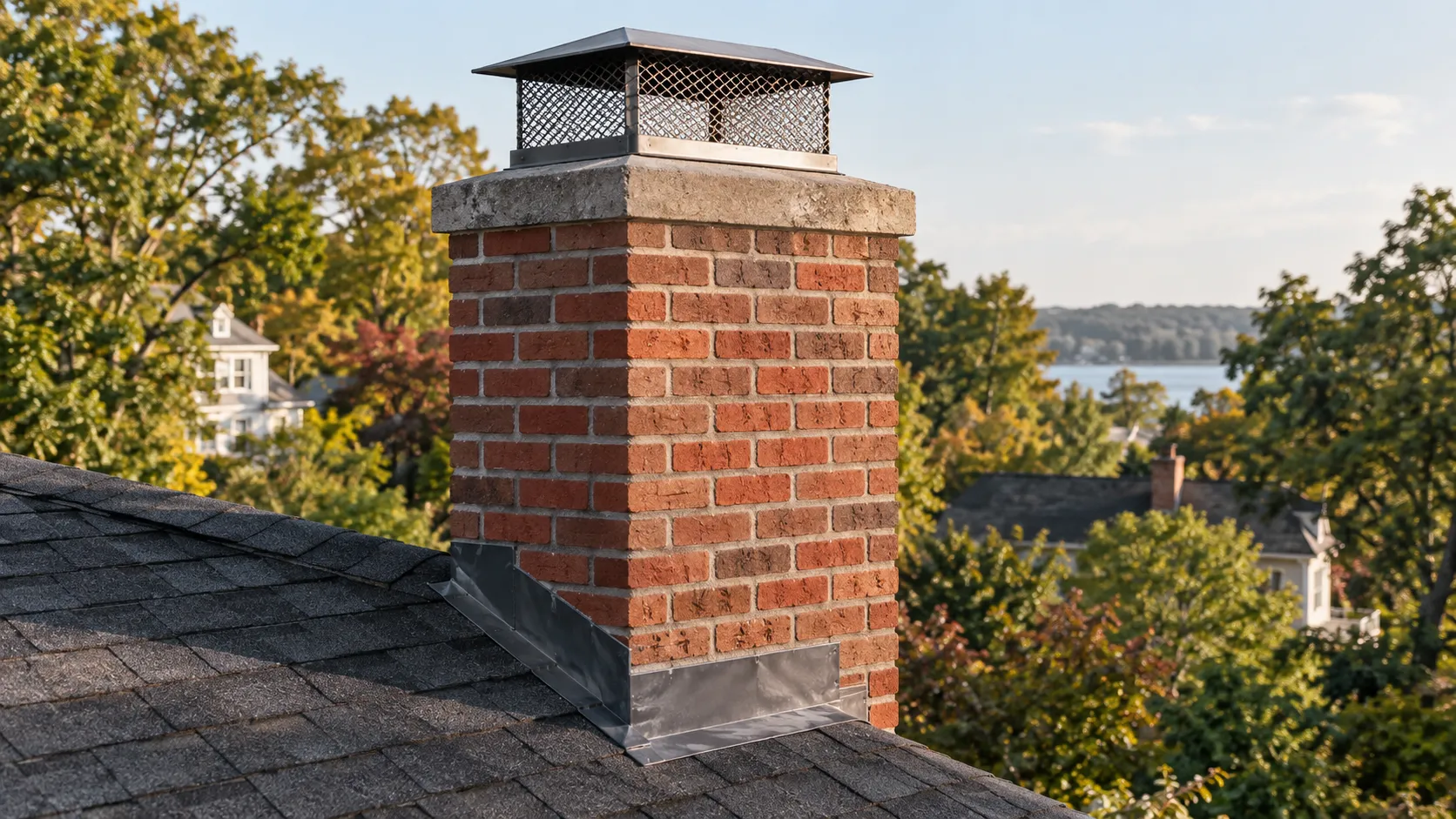
A quote that says “repair the chimney top” leaves room for confusion. The cap, crown and flashing are different components, so it helps to identify the part being discussed before comparing the price or the proposed work.
A cap covers the opening and helps keep rain and animals out. A crown is the sloped top surface over the masonry, directing water away. Flashing is at the junction of the chimney and roof. These distinctions are described in CSIA’s chimney water-protection guidance.
Match the term to the photograph
When reviewing a report, ask for photographs that identify the component by name and location. A wide photograph can show where a detail sits on the chimney; a closer one can document the concern. You should be able to understand the explanation without climbing onto the roof yourself.
If the estimate uses a term you do not recognize, ask the provider to mark it on the photo. Also ask whether the proposed work affects one component or several. A replacement cap and work at the roof junction should not disappear into a single unexplained line item.
Questions that make estimates easier to compare
- Which component is being repaired or replaced?
- What finding supports that scope?
- Which material and dimensions are included?
- What adjacent work is included or excluded?
- Will the finished work be documented with photos?
- How will additional findings be discussed before extra work starts?
Write down the answers next to each estimate. A lower total may describe a smaller scope, while a higher total may include access or adjacent work. Ask for those differences to be explicit before deciding.
Use symptoms to start the conversation
You do not need to choose a replacement part before asking for help. Describe what you can see safely, such as a change noticed from ground level or moisture indoors. Share the timing and any earlier repair documents. The assessment should connect that history to the condition of the actual system.
If moisture is the reason for your request, our rain-related leak checklist helps organize observations. For the next step, explore chimney repair assessments. A clear request names the concern; a clear proposal names the work.
Your questions, answered.
Are a cap and crown interchangeable?
No. They describe different components. Ask an estimate to identify the exact part and work involved.